
Exploration
I enjoy learning through hands-on experimentation and trial and error. I collect seeds each year and start them outdoors in the winter using the winter sowing method or indoors in early spring using grow lights. One of my past experiments was to test which seeds would not germinate at all indoors without undergoing the cold-moist stratification process.
Process
I picked 12 seeds that I had seen online or on seed catalogues as needing to be stratified: blazing star, goldenrod, joe pye, tickseed, bee balm, sneezeweed, butterfly milkweed, swamp milkweed, coneflower, shasta daisy, black-eyed susan, and foxglove beardstongue.
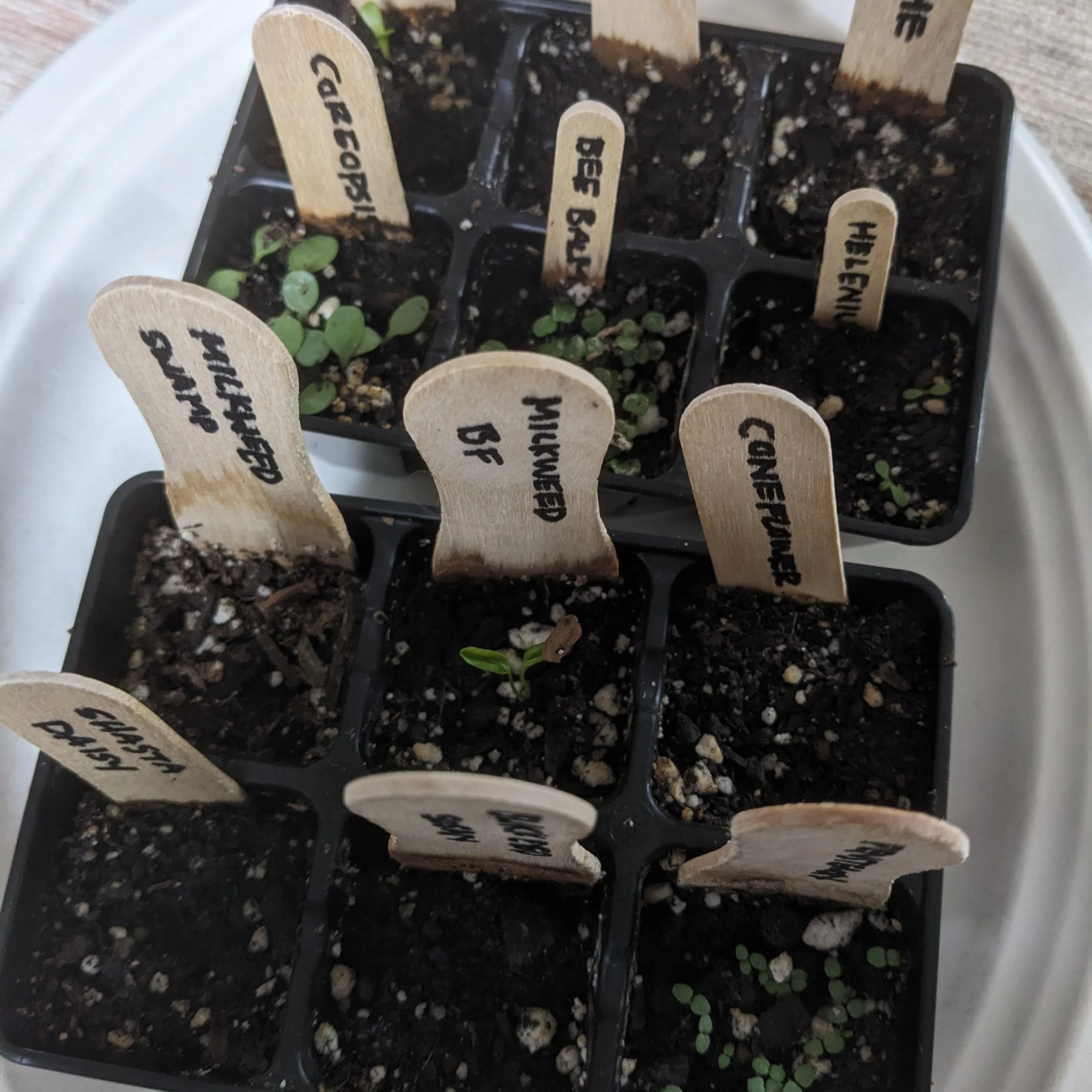
I started these unstratified seeds indoors in early Spring under my grow lights in the same way that I started the rest of my seeds that season.
Results
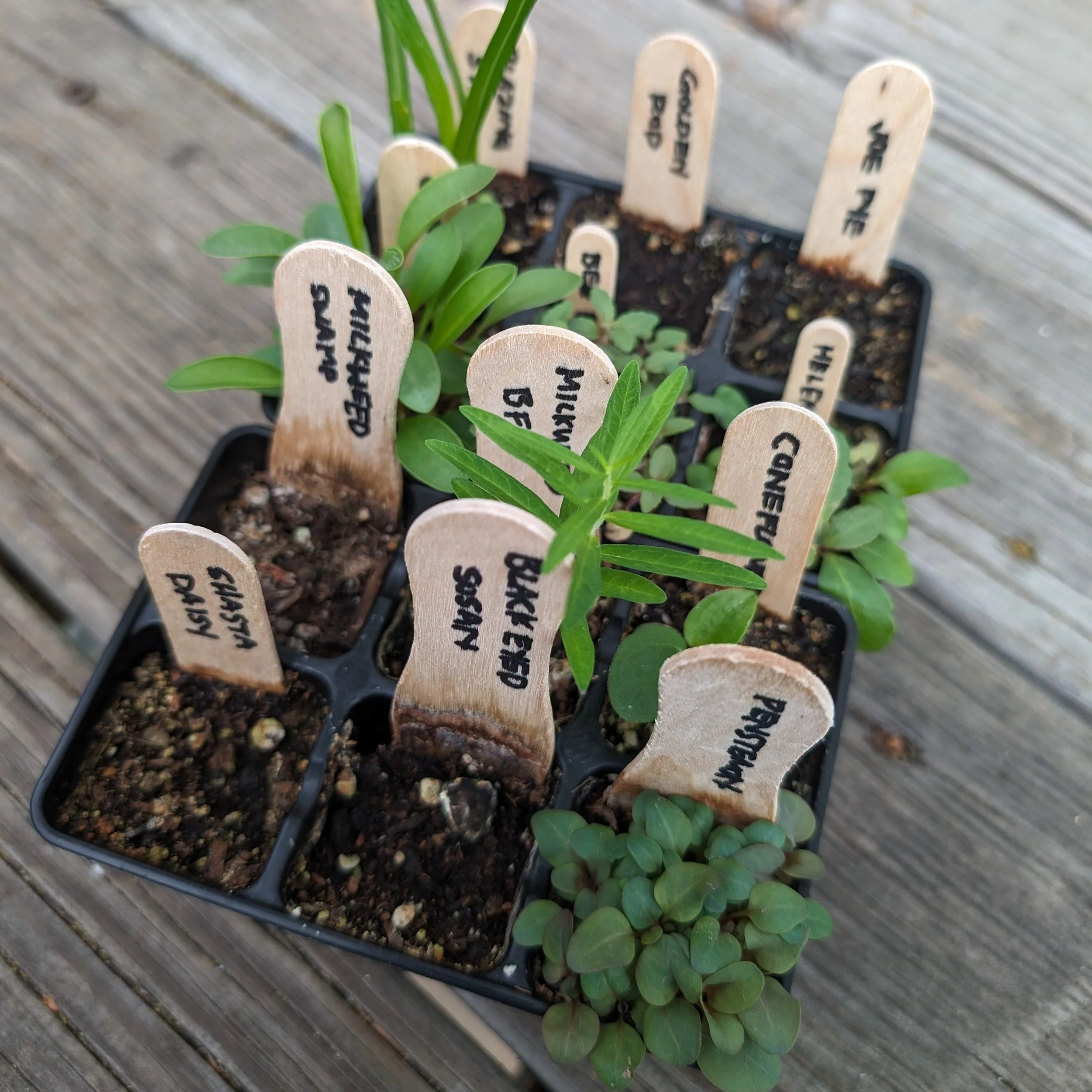
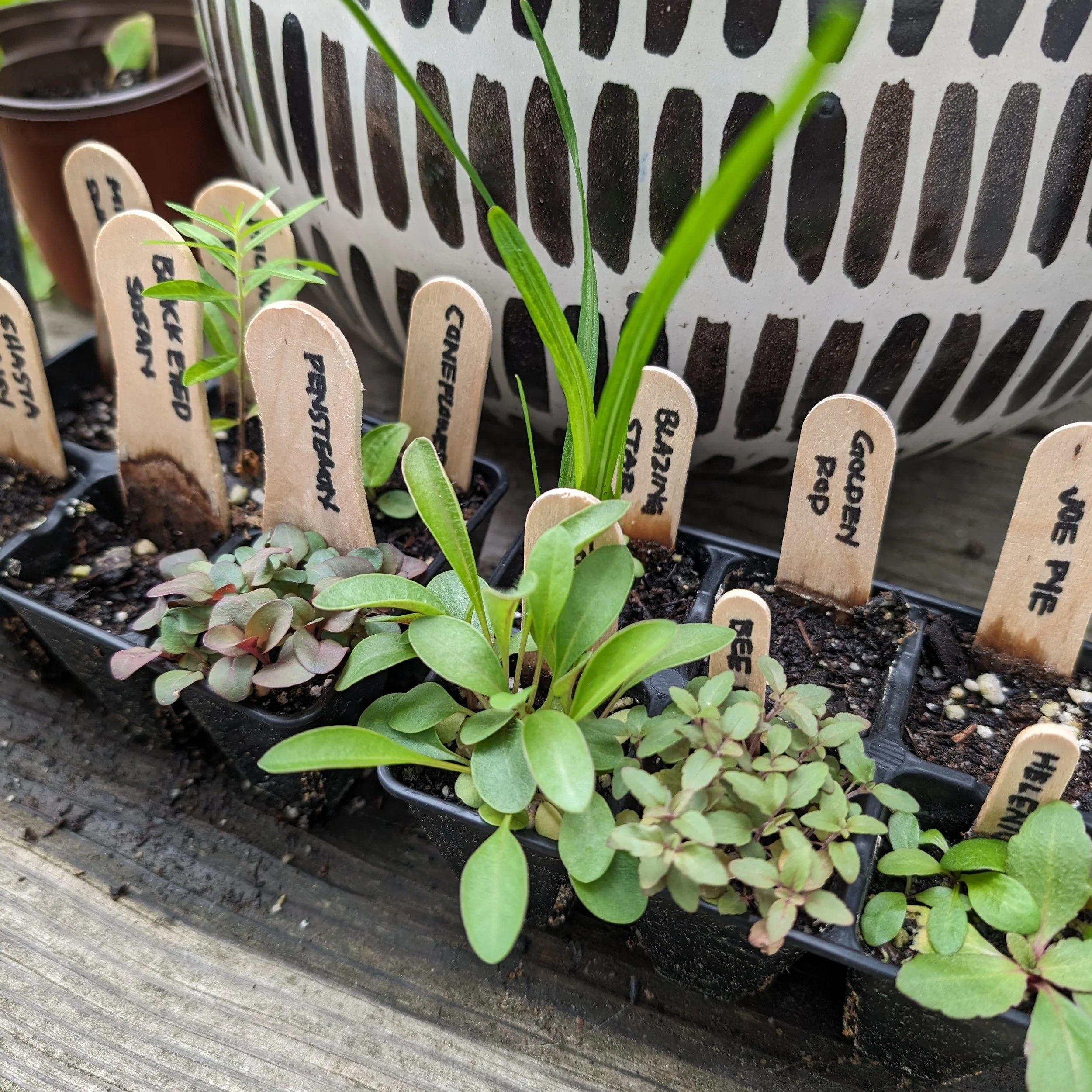
After two weeks, only 6 of the seeds had germinated. A month later, I had my final results: 7 seeds had germinated including foxglove beardstongue, coneflower, butterfly milkweed, sneezeweed, bee balm, tickseed and blazing star.
So from my informal experiment, there were 5 seeds that my results showed that absolutely needed to be winter sowed: goldenrod, joe pye, swamp milkweed, black-eyed susan and shasta daisy.
Future Plans
This experiment made me decide to prioritize these 5 seeds for my winter sowing this year and to repeat this experiment this upcoming Spring to see if my results differ. Stay tuned for more information about winter sowing in the next few weeks.
