
Waiting
Like many gardeners, I am paging through seed catalogues each winter and dreaming of spring. But there is still a lot we can do - even in these coldest of months. I ended up having two snow days this week, and I made sure to take advantage of the extra time to put out my winter sowing jugs.
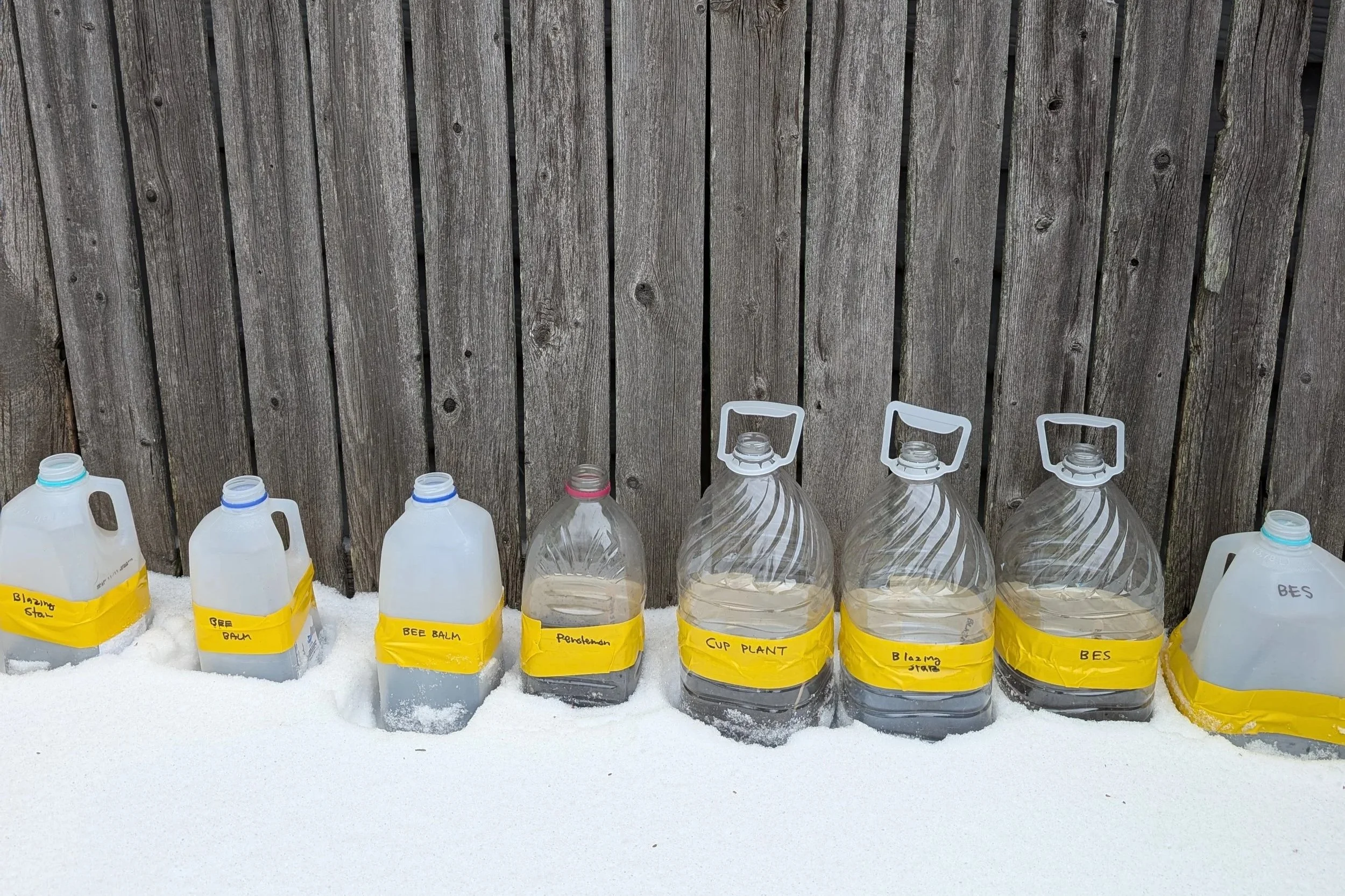
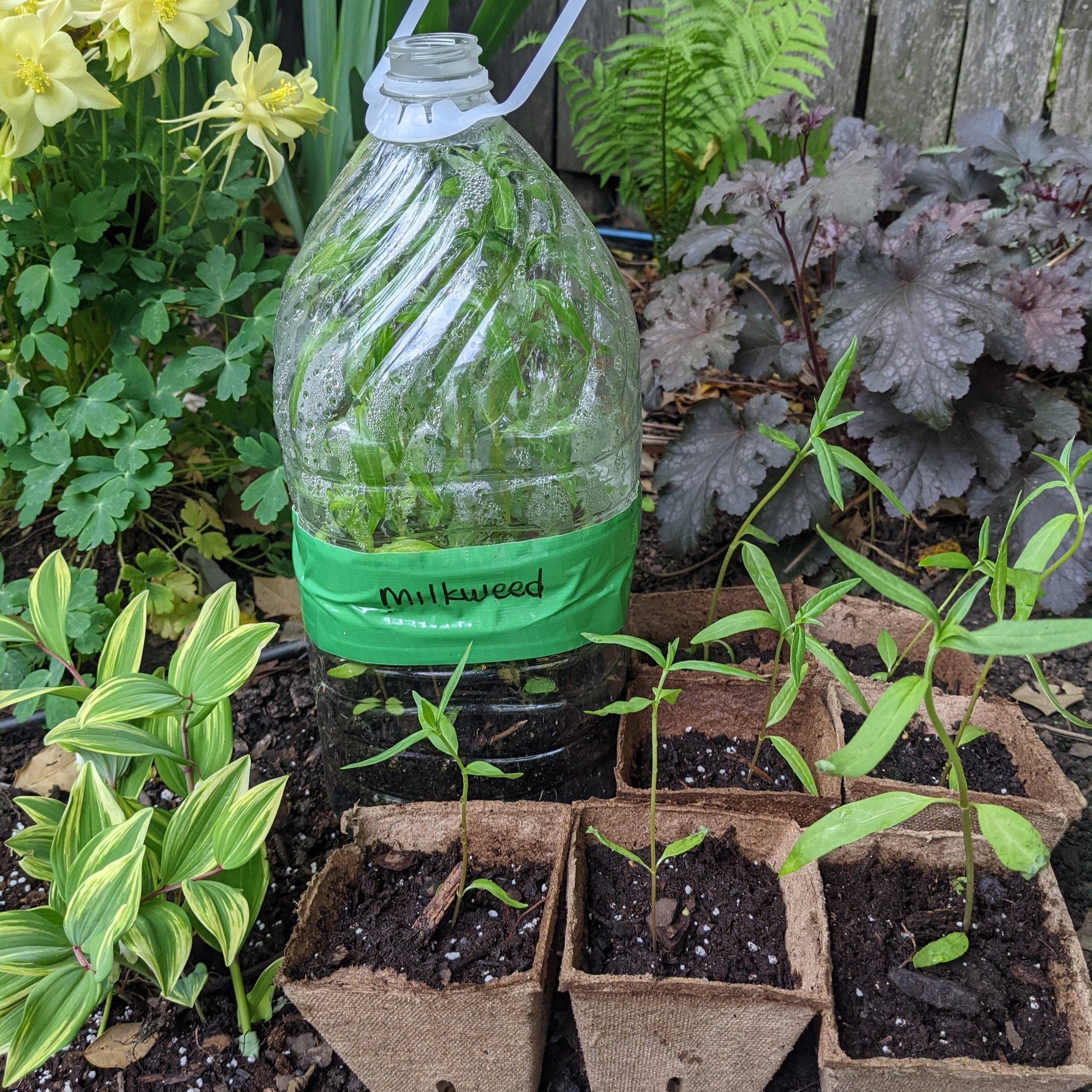
Winter sowing is seed starting method that allows you to plant seeds outdoors during winter. There are lots of ways to do this, but I usually upcycle one-gallon plastic water bottles or milk jugs into greenhouses. This method helps shelter the seeds from wind and critters, and provides the ideal conditions for a natural process called cold moist stratification.
Some plants, particularly native wildflowers, have a hard seed coating that helps protect them from sprouting too early. These seeds require exposure to low temperatures and moisture to break down the seed coating before they can germinate (usually 4-6 weeks). This clever mechanism helps prevent the seeds from being tricked into breaking dormancy until it’s just the right time.
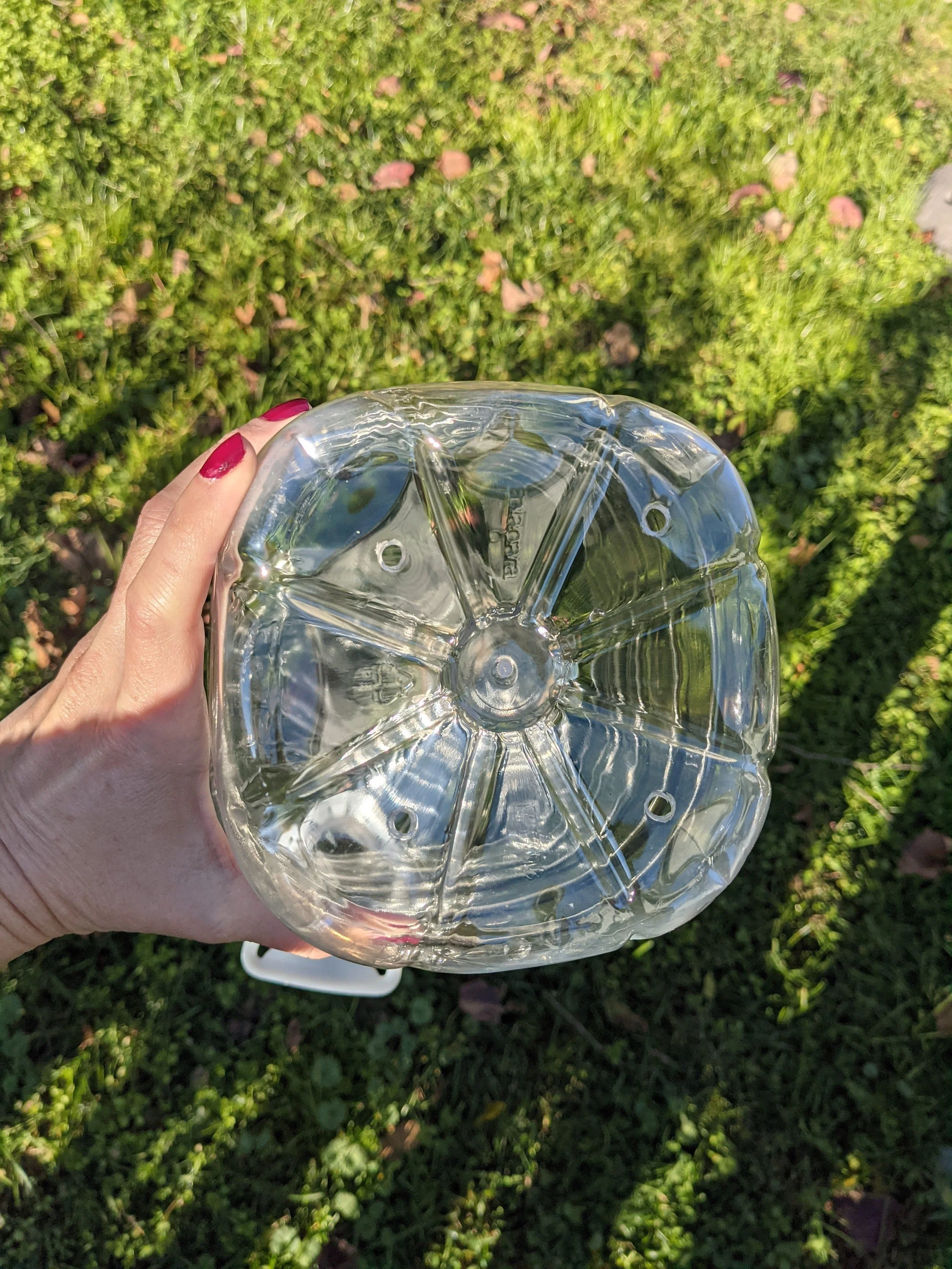
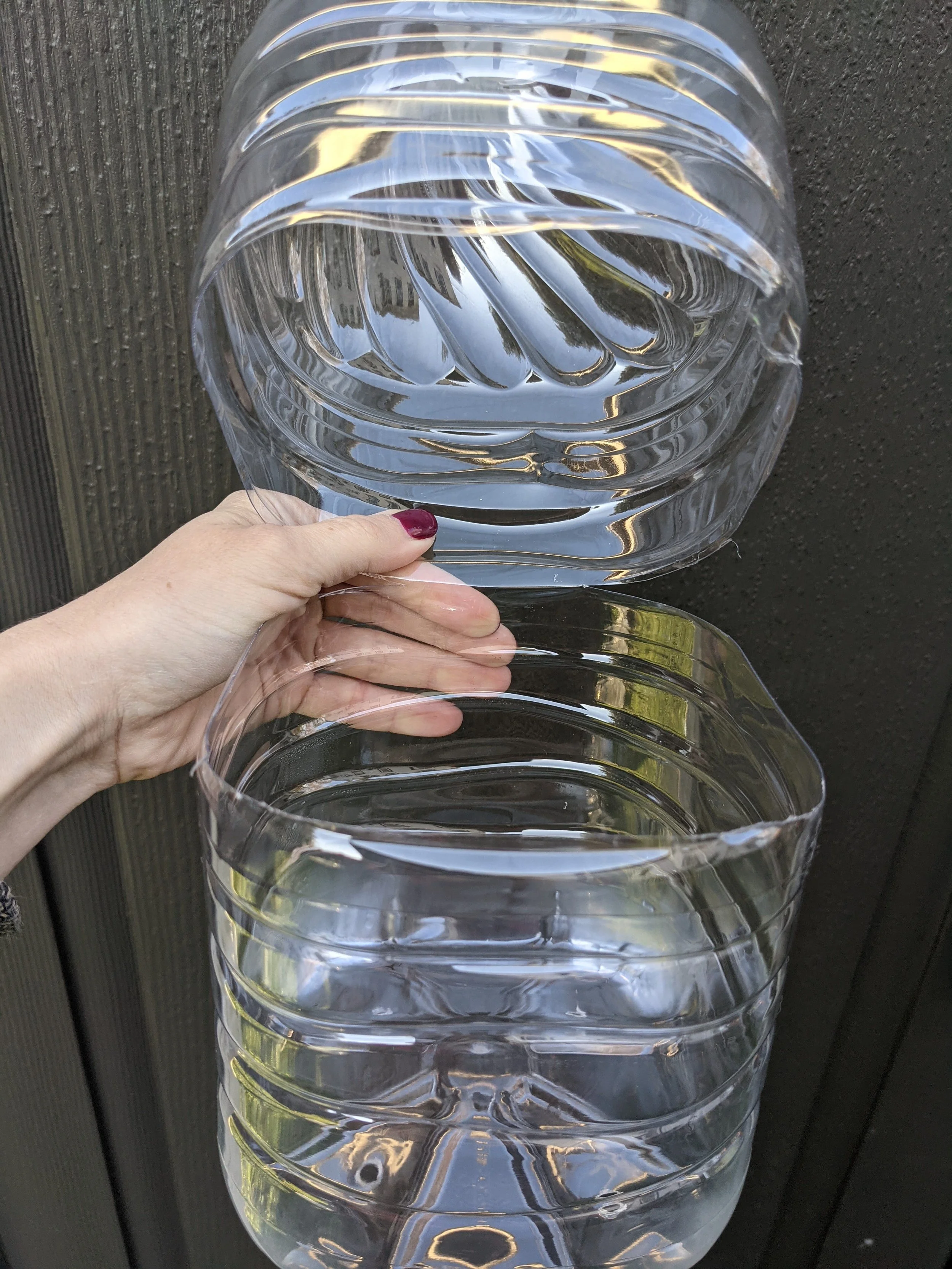
Here are some instructions for creating your own greenhouses:
Wash out bottles and remove labels/caps
Poke 4-6 holes in the bottom for drainage
Find a point 5-6 inches from bottom of bottle and cut around the perimeter, leaving room for a 2 inch flap.
Fill the bottle with 3-4 inches of potting soil.
Spread out seeds on top of soil in an even layer. Cover with about ¼ inch of soil
Add popsicle stick with name of plant inside the bottle.
Seal bottle with duct tape.
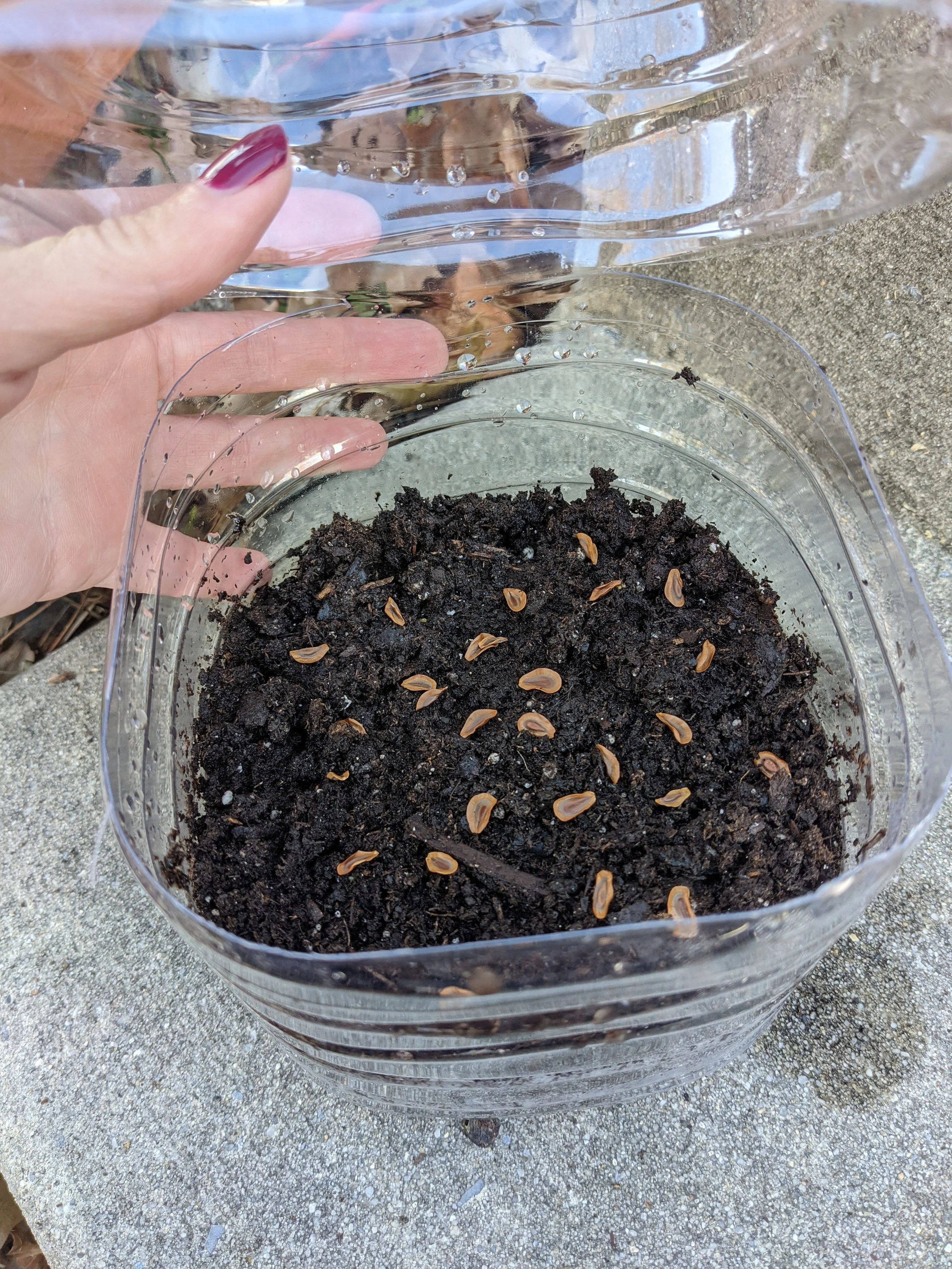
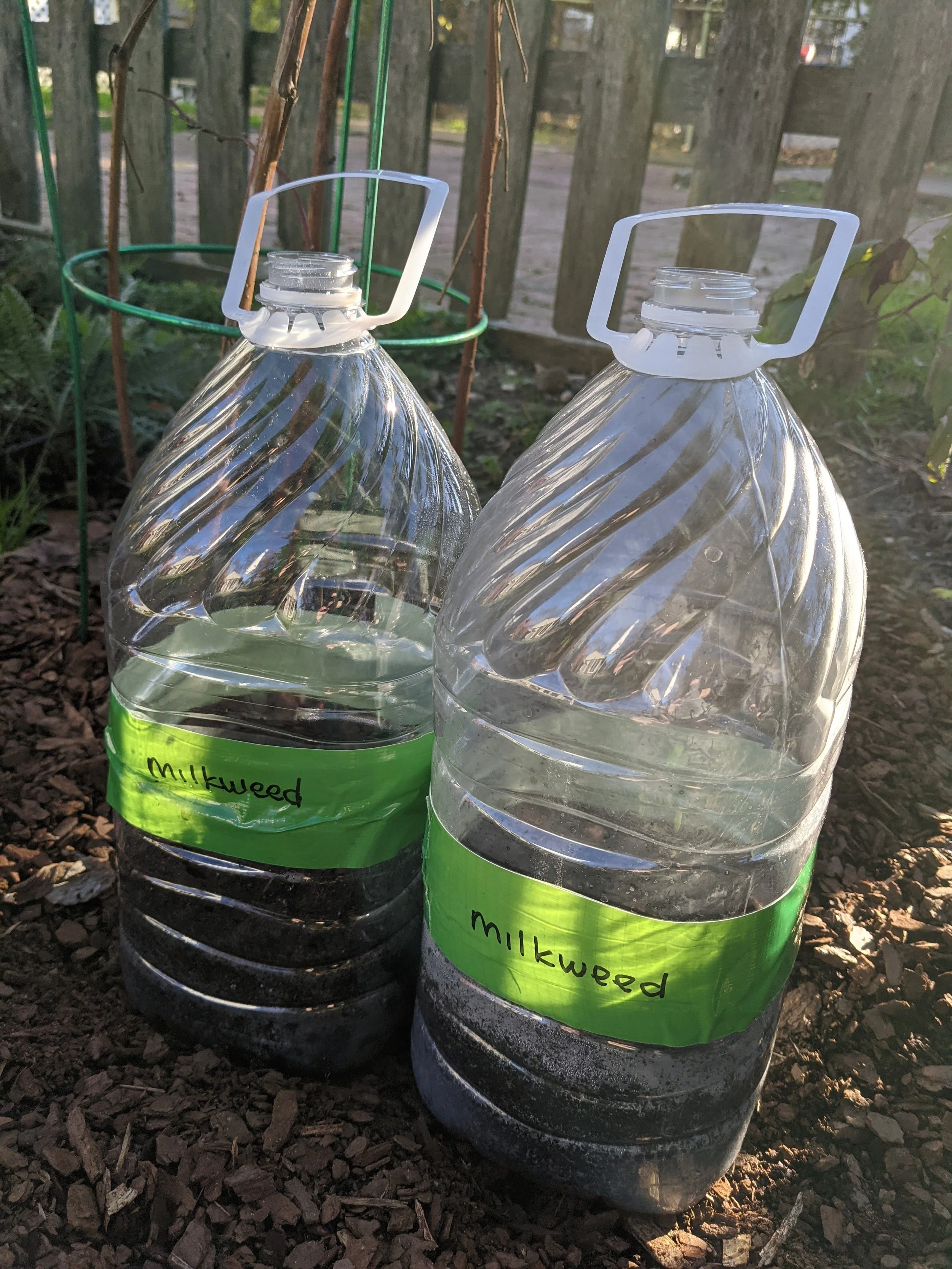
Next Steps - Winter
Water your greenhouse by pouring water through the top opening and letting it trickle out of the bottom drainage holes. Water it just enough so that the soil is damp but not sopping wet.
Place the container outside in a sunny spot in your yard.
That's it! Throughout the winter, the rain and snow will provide the moisture needed to break down the seed coating and allow the seeds to germinate.
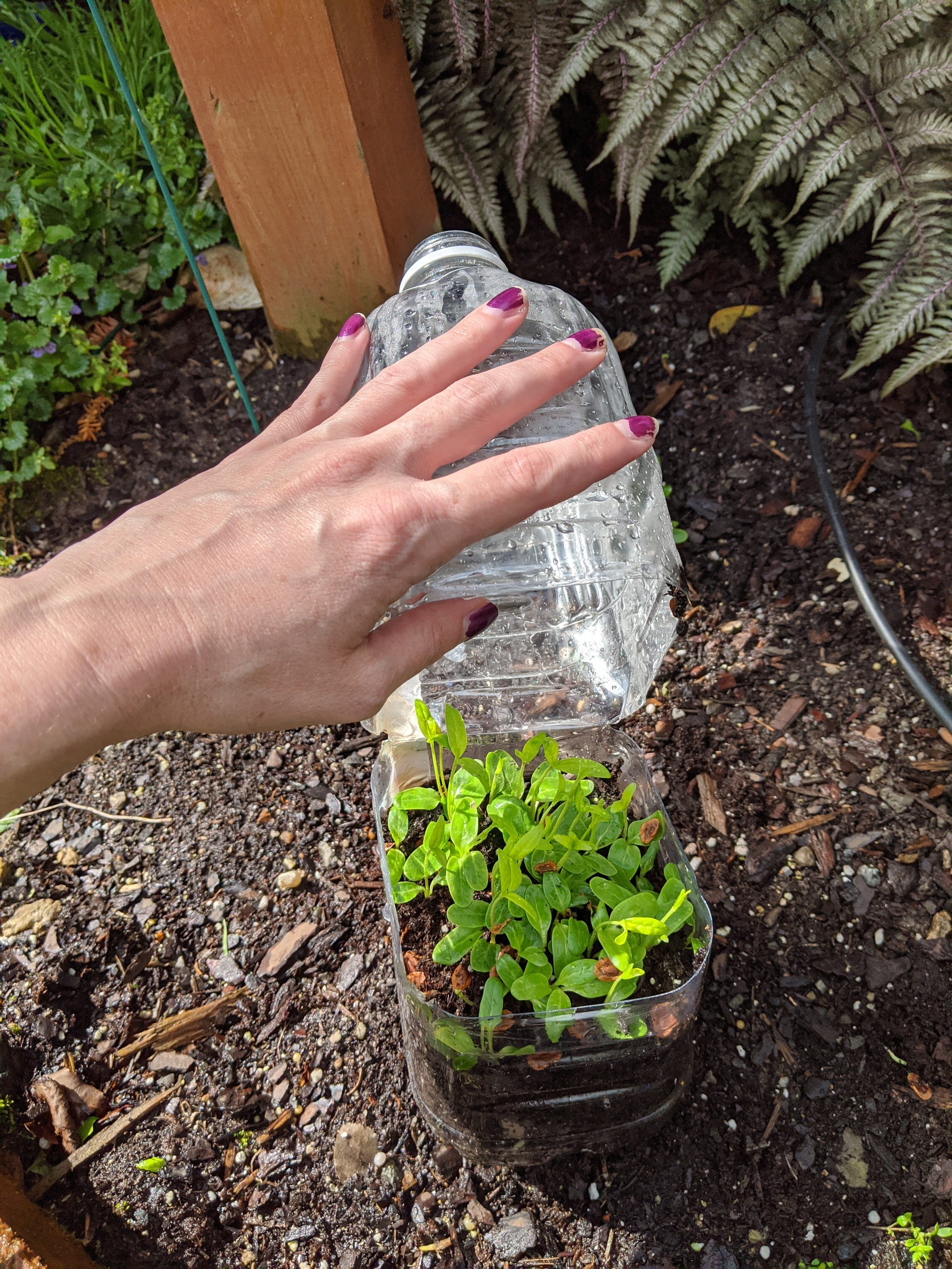
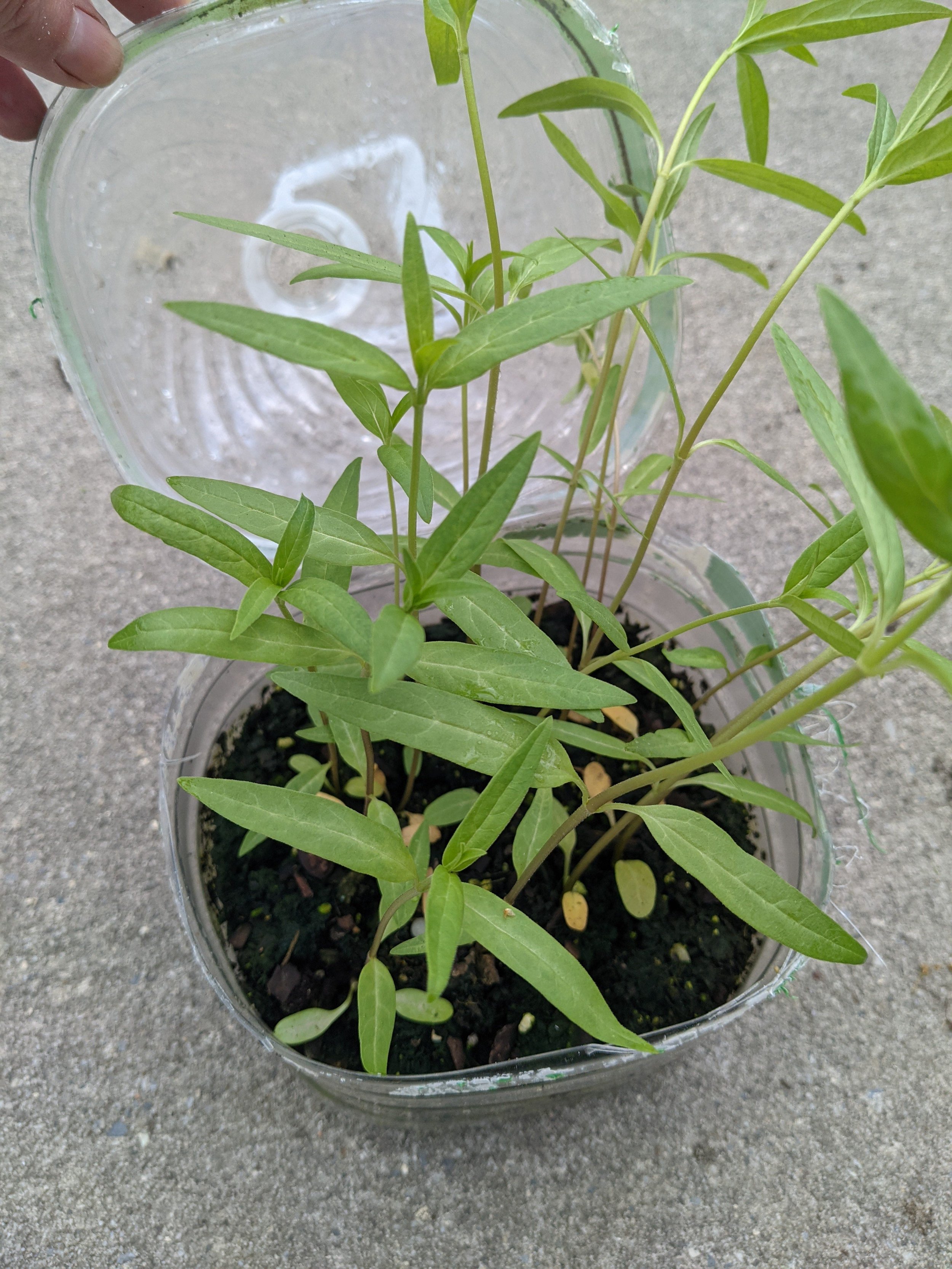
Next Steps - Spring
In April, take a look to see if your seeds have sprouted yet. If not, just give them a bit more time to germinate. Milkweed in particular can take a while to germinate, so be patient.
Transplant the seedlings to the garden in late April or early May - or when they begin to outgrow their greenhouse.
Remove the tape from the greenhouse and carefully scoop out the seedlings. If multiple plants have sprouted, either separate them by carefully untangling the roots or just plant the entire chunk of seedlings and divide them later if needed.
